

LEV MÉS · Materials
Turquoise
Turquoise is a hydrated copper aluminium phosphate. Historical ornaments combine it with gold, enamel and religious motifs; their design tells a different story from mineral identification. 1

Reading the formula
CuAl₆(PO₄)₄(OH)₈·4H₂O 7
Copper aluminium phosphate
Copper
Phosphate group
Hydroxyl and water
Cu stands for copper and Al for aluminium. PO₄ denotes phosphate groups. OH groups and bound water are also part of the mineral’s ideal formula.
Material classification is not an analysis of an item of jewellery offered for sale.
Documented country examples
PolandCollection locality for this specimen
Country areas provide orientation. Records may concern occurrences, examined specimens or collection objects; each country states its role. No mine locations or confirmation of the origin of our jewellery.
The material’s history
eleventh-century 2
An eleventh-century crescent
A pendant at the Metropolitan Museum combines turquoise with gold, cloisonné enamel and filigree. Two confronted birds form its central motif. The museum attributes the work to eleventh-century Egypt. 2
An American scarab
Around 1900, Marcus & Co. of New York used the scarab form in a pendant. Dated 1891–1902, it combines an oval turquoise cabochon with gold and demantoid eyes. Its Egyptian-inspired shape belongs to an American design of that period. 3
Turquoise mosaic in ceremonial imagery
The British Museum dates a double-headed mosaic serpent from Mexico to the fifteenth–sixteenth century. It was probably worn as a pectoral on ceremonial occasions. The museum’s account connects serpent imagery with several Aztec/Mexica deities, including Quetzalcoatl. 6
What this source establishes
This explains the object’s religious context, not an effect of wearing turquoise.
Wearing and care
From material to jewellery
Turquoise in jewellery

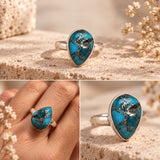
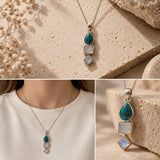
Selected by the material name used in the shop. This link does not identify an individual stone or confirm its treatment or origin.
Sources and locators
The numbers lead to the source records. Open an entry for the original source, its role and the relevant passage.
1 A closer look · Original research
2 The material’s history · Collection record
3 The material’s history · Collection record
4 A closer look · Original research
5 A closer look · Original research
6 Tradition and meaning · Collection record
7 Composition · Nomenclature
8 Wearing and care · GIA care guidance
GIA · Turquoise Care and Cleaning Guide (opens in a new tab)
9 Documented country examples · Collection record
6657 · Turquoise · Mineral and Gem Collection (opens in a new tab)
Limits of this information
The examples concern the specimens, objects and sources named. They do not establish the origin, treatment or health effects of a specific item of jewellery.