

LEV MÉS · Materials
Silver
Silver is a relatively soft, shiny metal. Historical bracelets and a ring carrying a message of love show different ways of turning this material into jewellery. 1 2 3
Reading the formula
Ag 9
Chemical element 1
Silver
Alloy
Coating
Ag is the chemical symbol for silver. An element symbol describes the pure metal. Alloys and coatings need additional material information. 1
Material classification is not an analysis of an item of jewellery offered for sale.
Formation and properties
Structure and character
What 925 means for silver
Silver’s chemical symbol is Ag. Sterling silver contains 92.5 per cent silver, with copper or other metals making up the rest. The number 925 states the nominal silver content in parts per thousand. The number alone does not describe the whole construction or any additional gilding. 1 4
Why silver can darken
Tarnishing occurs when sulfur-containing gases react with the silver surface, forming silver sulfide. The dark layer is a surface change. A solid silver object and an object with a thin silver coating require different consideration when choosing care. 7
Documented country examples
Kongsberg in Norway is one documented occurrence. In their 2004 collection study, Nordrum and Berg describe native silver specimens in wire, crystal and tree-like forms. Their report concerns particular collections and their history, not a worldwide origin list or the source of modern jewellery. 5
NorwayDocumented collection localities
Kongsberg 5
Country areas provide orientation. Records may concern occurrences, examined specimens or collection objects; each country states its role. No mine locations or confirmation of the origin of our jewellery.
Silver around the wrist
The Metropolitan Museum catalogues serpentine silver bracelet 06.1085 as Greek, dated approximately 350–300 BCE. It documents a worked jewellery form. Greek bracelet 54.601 in the Walters Art Museum has a different construction: bronze lies beneath its silver plating. The museum dates it to the fifth century BCE. 2 6
A message of love inside a ring
Silver ring 62.4/81 in the London Museum is inscribed inside “Love intire is my desire”, expressing a wish for undivided love. The initials IM belong to an unidentified maker, and the catalogue gives no production date. 3
What this source establishes
This meaning belongs to the inscription and collection object described.
Wearing and care
Everyday care
The Canadian Conservation Institute recommends protected storage and removing tarnish only when necessary. Polishing also removes silver and can damage thin plating. Construction, gilding and other materials must be considered before treatment. A piece set with gems therefore has no one-size-fits-all dipping or polishing recipe. 8
Jewellery in 925 silver

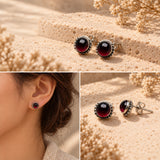
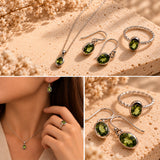
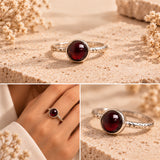
Show more (19)
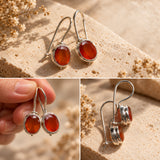 Agate Earrings
 Citrine Bracelet
 Citrine Ring
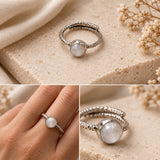 Moonstone Ring, Round
 Turquoise Silver Stud Earrings
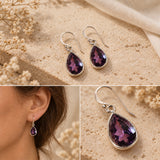 Ametrine Earrings
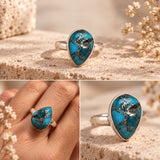 Turquoise Ring
 Tourmaline Bracelet
 Citrine Earrings
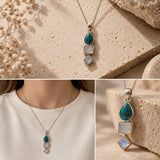 Turquoise and Moonstone Necklace
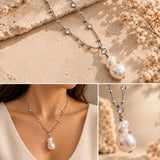 Baroque Pearl Necklace
 Apatite Bracelet
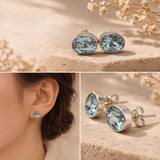 Blue Topaz Stud Earrings
 Watermelon Tourmaline Drop Earrings
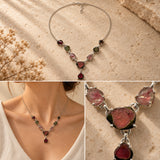 Watermelon Tourmaline Necklace
 Moonstone Necklace
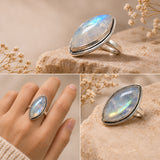 Moonstone Ring, Marquise
 Labradorite Bracelet with Hematite and Lobster Clasp
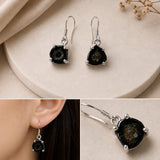 Tourmaline Drop Earrings with Dark Slices


Selected by the material description in the shop.
Sources and locators
The numbers lead to the source records. Open an entry for the original source, its role and the relevant passage.
1 Structure and character · Institutional reference
Silver — Element information, properties and uses (opens in a new tab)
2 The material’s history · Collection record
3 Tradition and meaning · Collection record
4 Structure and character · Institutional reference
Gesetz über den Feingehalt der Gold- und Silberwaren (opens in a new tab)
5 Documented country examples · Collection record
Historical mineral collections in the silver mining town of Kongsberg, Norway (opens in a new tab)
6 The material’s history · Collection record
7 Structure and character · Institutional reference
Understanding how silver objects tarnish (opens in a new tab)
8 Wearing and care · Institutional reference
Silver — Care and Tarnish Removal, CCI Notes9/7 (opens in a new tab)
9 Composition · Nomenclature
Limits of this information
The examples concern the specimens, objects and sources named. They do not establish the origin, treatment or health effects of a specific item of jewellery.